By Bart Walters, in Jomtien, Thailand

Dear Global Intelligence Letter Subscriber,
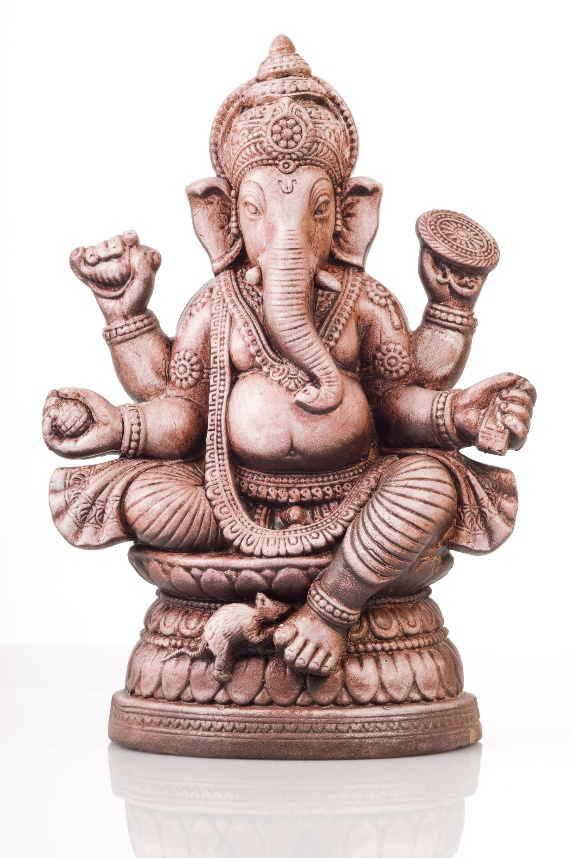
Ganesha clears the path… © iStockPhoto.com/kontrast-fotodesign
Stay in Southeast Asia for any amount of time, and you’ll become familiar with the iconography of Buddhist and Hindu culture. My favorite character is Ganesha, the pot-bellied deity with an elephant’s head and multiple arms.
He’s usually shown holding a variety of objects that give us clues to his special powers. His large elephant head, the noose he holds, and the mouse that always accompanies him all represent his capacity to clear paths and destroy internal barriers like ego and ignorance. Ganesha is “the remover of obstacles.”
In the modern world, Ganesha can manifest in many ways. Sometimes Ganesha is a friend who helps you through difficult times, or that real estate agent who found you the perfect house.
Sometimes Ganesha is the banker who approves a loan, the lawyer who untangles a knot of paperwork, or the entrepreneur who creates an opportunity where none existed before.
And sometimes Ganesha works on a larger canvas. Sometimes he builds a bridge, opens a trade route, or clears away regulations that have stood in the way of progress for years.
Sometimes Ganesha gets elected prime minister.
“Bangkok is the most visited city in the world, welcoming 30.3 million international tourists in 2025. It’s the eighth time Bangkok has claimed that crown since 2012.”
Over the past three decades, Thailand’s economy has waxed and waned several times. When I got here in 1999, they were just coming out of a currency collapse. Two coups and a pandemic later, democracy has made a big comeback. What’s more, exports are surging—jumping 21% year-on-year to $34.7 billion in June, the 24th consecutive month of growth. Plus, Bangkok is the most visited city in the world, welcoming 30.3 million international tourists in 2025. It’s the eighth time Bangkok has claimed that crown since 2012.
The economic tide in Thailand is switching from ebb to flow—particularly in the property sector. Political strategies, economic conditions, regional competition, and immigration challenges are churning, creating opportunities across the country for value-seeking homebuyers and investors.
And Thailand’s new prime minister wants to clear the path to full-on growth…
First, a little political history:
In 2006, a military coup overthrew Prime Minister Thaksin Shinawatra’s government, ending his five-year reign. Even though he is a polarizing figure in Thai politics, it can’t be denied that his were some hard shoes to fill. He was the first prime minister to ever complete a full term, and he continued to influence Thai politics from exile.
After Thaksin’s departure, the political landscape was in turmoil for several years, with various groups attempting to govern, but none gained sustainable traction. In 2014, the army took over again and ran the country peacefully and efficiently until a provisional government was installed in 2019, and new elections took place in 2022.
Enter Anutin Charnvirakul, who became prime minister late last year. He is a 59-year-old Bangkok-born Chinese-Thai who graduated from Hofstra University in New York in 1989. He’s also the founder and president of Sino-Thai Engineering (STECON Group), a construction industry giant in Southeast Asia.
Anutin has served as deputy prime minister under several administrations and in other cabinet posts. He was the minister of health during the COVID-19 pandemic and guided Thailand through the crisis with flying colors. He also championed the legalization of cannabis in 2022.
Thailand appears to have finally filled its leadership vacuum with a seasoned politician who knows how to build a coalition and how to get things done. One of his first initiatives is to stop the bleeding in the crucial tourism sector.
Tourism accounts for over 20% of Thailand’s GDP and 20% of its employment. This sector brings in twice as much as agriculture and rivals manufacturing for earning power. Thailand’s tourism income exceeds the GDP of many countries. The ripple effect tourism has on the retail, hospitality, transportation, and wellness sectors cannot be overstated.
“You could say tourism is the lead generator for the real estate business.”
Tourism is also intimately connected to the real estate sector, particularly in the condominium and luxury villa markets. Every foreigner with a sea-view condo in Pattaya or a swanky pool villa in Phuket was a tourist at some point. You could say tourism is the lead generator for the real estate business.
Even though 33 million visitors arrived in Thailand in 2025, the number was down nearly 8% from 2024 and remained well below pre-pandemic levels. In 2019, 40 million travelers visited the Land of Smiles.
Stiff competition from Southeast Asian neighbors such as Cambodia, Vietnam, and the Philippines has cut deeply into Thailand’s once-dominant market share. A recent surge in inflation and Thailand’s stubbornly strong currency make these alternative destinations more affordable and, hence, more attractive to travelers.
Compounding the problem is a wave of bad press. Everything from pub brawls to taxi scams to drug-fueled road rage grabs headlines, tarnishing Thailand’s once-sparkling image.
(Predatory taxi drivers in Bangkok’s Sukhumvit Road routinely overcharge naive visitors unfamiliar with the city, the currency, and the customs.)
Of particular concern is the infiltration of organized-crime elements from neighboring countries, mainly China. They slip into the country by taking advantage of liberal visa laws left over from the COVID era. They set up illegal businesses, create scam networks, and engage in trafficking humans, drugs, and firearms with no regard for any laws.
The new prime minister views the lax approach to immigration as the root of the problem. It’s too easy to get in, too easy to stay, and not so hard to go undetected. Recently, Thailand tightened its visa laws, severely restricting the number of countries eligible for a visa waiver and eliminating the age-old practice of making “visa runs” (quick trips out of the country to renew a visa… sometimes not even performed by the person who possesses the visa). Ninety-three countries previously allowed to enter Thailand without a visa must now apply using the new “digital arrival card.”
They’re still all smiles at the airport, but if you plan to visit Thailand, the authorities need to know who you are and where you are, or you can’t stay. Safety for good visitors—deterrent for bad guys.
Overhauling the visa system and weeding out bad actors was step one; cracking down on Thai companies controlled by foreigners through Thai nominees is step two.
Foreigners are prohibited from owning a majority of the shares and controlling a registered Thai company. Criminals circumvent this restriction by forming legal Thai companies with “nominees” who are Thai nationals holding the majority of the shares. Often, the nominees are paid a fee for using their identities and have no role in the company’s operations. The bad guys then proceed to operate their nefarious enterprises right under the nose of Thai authorities, opening bank accounts, buying property, laundering money, and expanding their regional empires.
Soon after the new prime minister took office, Thai authorities launched an effective nationwide campaign to identify and shut down these illegal businesses, arresting foreigners and Thai legal firms that helped set them up.
The crackdown has sent a chill down the spine of property developers in Thailand. These nominee structures have long been the practical workaround for foreign participation in landed property, especially luxury villas in places like Phuket, Koh Samui, Pattaya, and Hua Hin.
You set up a company… you buy a pool villa in the company name… you can transfer the whole thing if you sell the place. This convenient sidestep has been used for decades to help foreigners buy land and houses. Now this gray area has a big, bright spotlight shining on it. Investors are spooked. Inventory is piling up. Property developers are stunned.
Thai household debt is over 87% of GDP. Credit is tighter than ever, so domestic property purchases have been seriously curtailed. If the steady stream of foreign investment historically generated by property sales is cut off or diverted somewhere else, the housing market is in real trouble. One luxury villa developer I spoke with in Pattaya put it very plainly: “Who the hell is going to buy all these houses?”
Prime Minister Anutin supports two proposals currently under consideration by the Thai parliament to prevent the market from nosediving.
“If this proposal is accepted, Thailand’s housing market would be revolutionized.”
To relieve pressure on the luxury villa market and prevent Thailand’s suburban sprawl from turning into ghost towns, a proposal to change the current land lease options from 30 years to a 99-year transferable lease has been presented. Foreigners can already own a building, such as a house, in Thailand, but under this proposal, they would also have iron-clad control over the land it sits on.
If this proposal is accepted, Thailand’s housing market would be revolutionized, and homebuilders and homebuyers alike would breathe a massive sigh of relief. Major capital inflows would be triggered, both residential and commercial property values would escalate, and buyer demographics would shift dramatically.
International buyers would get generational security for retirement and family legacy investments. Expat-heavy markets like Pattaya, Phuket, Bangkok, and Hua Hin would erupt with new developments.
Coloring in the gray area with an economically mature and transparent channel to land ownership will be a game-changer.
Embracing transparency isn’t the only big change being considered.
Currently, the inventory of unsold condos in Thailand is at a record high, with over 400,000 units. We are used to seeing the condo market ebb and flow, shifting from “overbuilt” to “off-plan only” quite predictably, but this is something different.
Seventy percent of Thai mortgage applications for properties under 3 million THB ($92,000) are rejected due to excessive household debt. If Thais have the means to buy a property using cash, or the credit history to borrow, they tend to go upmarket. Domestic buyers qualifying for loans focus on luxury developments rather than mass-market apartments in Bangkok. Consequently, 25% of condo units in a city of 16 million people are unoccupied. That’s a problem.
New project launches are at an all-time low as developers focus on clearing inventory. Bangkok, in particular, is the very definition of a buyer’s market already, but another Anutin-backed proposal could trigger a condo bonanza.
Currently, foreigners can own only 49% of residential condominium buildings. If all the foreign quota units in a building are owned, buyers would need to either negotiate a lease or rely on another gray channel to buy them. This second proposal before the Thai parliament would raise the foreign quota to 75%, mirroring Cambodia, and overshadowing Vietnam at only 30%, and the Philippines at 40%.
In expat havens such as Bangkok, Pattaya, Phuket, and Koh Samui, the new law could immediately increase the value of these new foreign quota units by 20%. Such a move would unlock frozen inventory, attract a surge of international buyers, and drive up prices in popular areas. Instant capital appreciation.
Removing barriers to ownership, improving transparency, and clearing inventory would certainly put some pep in the property market’s step. But the administration wants to go further. They intend to refocus the tourism engine that feeds the property sector to tame its feast-or-famine nature by providing a steady stream of prospective foreign investors.
I’ve seen Thailand go through this cycle before. The Tourism Authority of Thailand (TAT) is one of the most effective government organizations you’ll find in this region. They know how to target markets. They know how to shift focus when new trends emerge. As a resident of several tourism hot spots here over the past quarter century, I’ve always been impressed with the TAT’s ability to develop and execute a master plan.
It’s also no small thing that competition from neighbors like Cambodia, Vietnam, and the Philippines is playing a role in diminishing their dominance in the Southeast Asia tourism market. It’s a matter of national pride with Thais. You could say the whole country takes it personally.
We should expect TAT to be extra-focused as they implement a new 4.5 billion baht ($135 million) strategy to boost tourism by redirecting their focus toward high-value experiences, enhanced safety standards, and promoting year-round events.
When travelers say they’re choosing Vietnam or Cambodia because it’s cheaper, Thailand answers: “Sure, but Thailand is a better value.” And they have a point. Thailand still offers an authentic Southeast Asian experience at affordable prices, but with infrastructure, conveniences, and comforts that many neighboring countries can’t yet match. And I say that as an expat who has traveled Southeast Asia extensively for a quarter century. (After I returned from a three-month stay in Danang, Vietnam, my neighbor in Jomtien asked me why I didn’t stay. “It’s nice,” I said. “But it’s not Thailand.”)
The strategy is calculated. Rather than chasing bargain hunters, Thailand is focusing on independent travelers who want the most bang for their vacation buck. The “cheap-Charlie backpacker” era is over. “Value-added” travel is where it’s at.
Promotions intended to mitigate the “low season” doldrums, like the annual “Amazing Thailand Grand Sale,” which orchestrates a nationwide campaign that links over 10,000 businesses offering deep discounts and exclusive privileges from June through August. Everything from airfare to hotels to restaurants to Thai fashion is slashed to “summer sale” prices. Head to any major shopping complex in Bangkok, and you will see that “shop-cations” are a real thing in Asia. Singles, couples, and families arriving to buy stuff they can’t get at home at prices they can’t believe.
Some specific markets are targeted by demographics and lifestyle. For example, health and wellness programs for senior visitors, fitness retreats featuring yoga, meditation, and Ayurvedic medicine for millennials, and medical tourism that draws visitors of all ages from all over the world. Thailand also leans into its popularity among the LGBTQ community and plans major festivals to enhance its standing as a Global Pride Destination.
A coordinated campaign to improve public facilities and public transportation in tourist destinations is underway nationwide. The Transport Ministry has directed international and regional carriers like Thai Airways to expand domestic services and open new international routes to smaller destinations to spread tourism revenue. Links between second-tier airports such as Chiang Mai, Phuket, Krabi, and Phang Nga have improved significantly. Phuket’s summer flight schedule is up 7%, for example, and Chiang Mai’s is up 17%. Plus, regional airlines are incentivized by the government to keep fares low, even in the face of rising fuel costs.
When you live here, you can feel it; the TAT promotion machine is fully engaged.
We’ve been feeling the ebb in Thailand’s property market for a while, but I can see high tide on the horizon. The new government’s plan to revive this sector could create some very surfable waves in the near future. But the tide won’t rise universally. Thailand is a big country with a multitude of markets to invest in. It leaves most newcomers scratching their heads and asking, “Where exactly do I catch this wave?”
Answer? Follow the infrastructure. Or, more accurately, get in front of the infrastructure. As International Living’s overseas property expert, founder of Real Estate Trend Alert, Ronan McMahon often puts it: follow the Path of Progress.
Over the past decade, a myriad of new infrastructure projects have been proposed and funded, but not all have become reality. Several major initiatives have been stalled as the country has waited for decisive leadership and a clear direction on how to prioritize them. It’s important to know which of these projects are supported by the new prime minister and his coalition.
In Bangkok, it’s pretty easy; just look for the new Skytrain and Subway stations. In an effort to reduce car commuting, the city’s electric rail network is constantly expanding with new lines. This year, two new Skytrain lines (Orange and Purple) will add over 60 kilometers (37 miles) to Bangkok’s rapid transit system, and two new MRT Subway lines (Yellow and Pink) will increase it by another 60 kilometers. Fast and efficient public transportation has been the key to Bangkok’s rapid expansion.
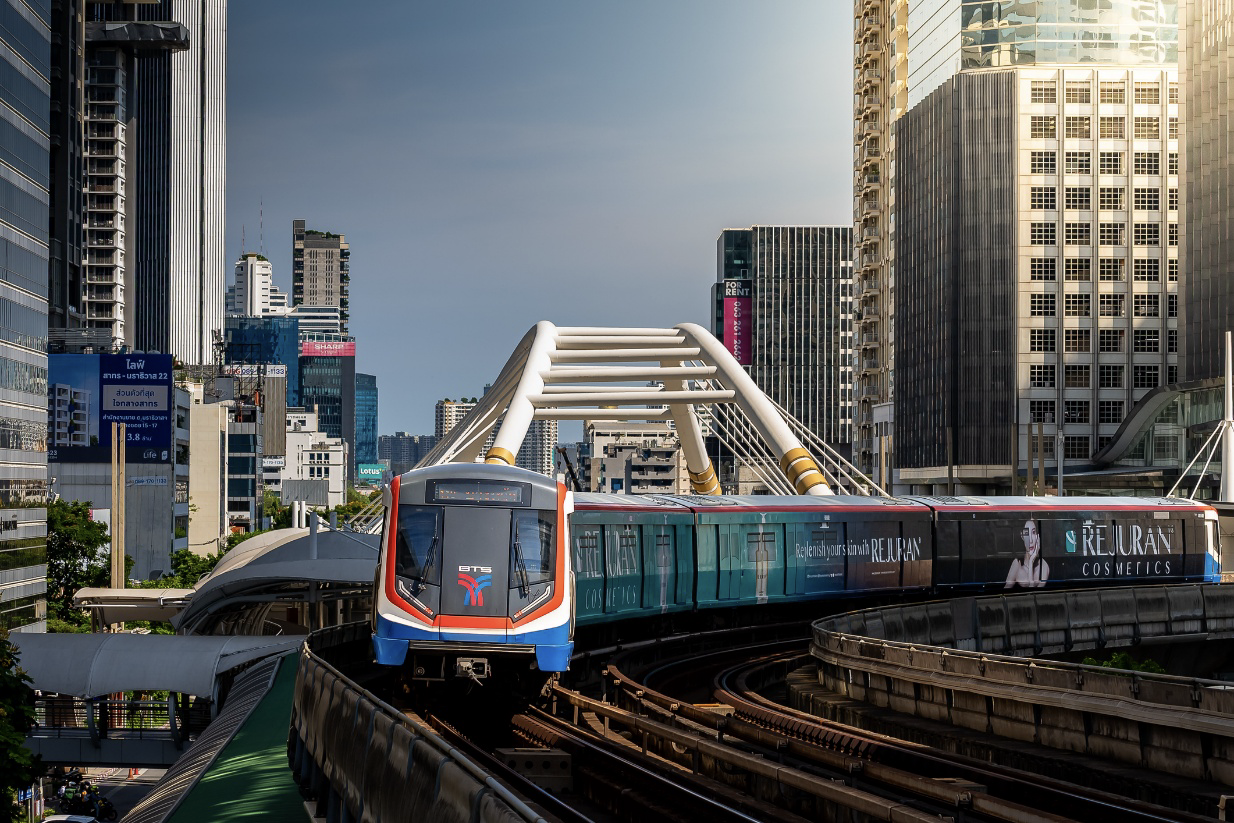
Looking for property profits in Bangkok? Look for the Skytrain stations. © iStockPhoto.com/Tieataopoon
Condos near mass transit stations are moneymakers for buy-to-let investors in Bangkok with net returns between 6% and 8%. Even in tough times, they hold their value and are fairly liquid. This is probably the easiest infrastructure play in Thailand. And, if you choose to live in Bangkok, trust me, you want to live near a public transportation portal.
New lines and new stations are announced far in advance of being put into service, so it’s easy to see what’s coming. As you might imagine, interchange stations that feature both Skytrain and MRT Subway connections are the holy grail.
Easily the most noteworthy infrastructure initiative that’s been slow-rolled for the past few years is the three-airport high-speed train project. When complete, this train will link the two international airports in Bangkok, 200 kilometers (124 miles) down the Eastern Seaboard, to the airport near Rayong.
This project is part of the Eastern Economic Corridor (EEC) initiative, which basically supercharges Thailand’s manufacturing and logistics sector and connects Bangkok to the beach in less than an hour.
Property owners on the Northern end of the line in well-established expat havens like Pattaya, Jomtien, and Bang Sare will certainly benefit, but the real winners will be at the southern end of the line in Rayong Province. Spectacular and sleepy beach towns like Ban Chang, Mae Ram Phueng, Mae Phim, and Ban Phe haven’t been gentrified or spoiled by mass tourism, and properties can be had at a 30% to 50% discount from what you find in Pattaya.
The government supports accelerating this project, so this wave may be surfable for the next three to five years.
Talk to property hounds in Thailand for any length of time, and you’ll hear about several bridge projects that could seriously impact the communities they link in an economically positive way. Anutin’s coalition supports building most of them.
The proposed 6-kilometer (3.7 mile) bridge from the mainland to Koh Chang is my favorite. The bridge would connect the coastal city of Trat to Thailand’s third-largest island, Koh Chang, and all the little sister islands in the archipelago like Koh Mak and Koh Kut. Seventy-five percent of the island is a national park, and this part of Thailand is one of the most unique ecosystems in the world. (Seventy percent of the Koh Chang Archipelago is covered in virgin rainforest.)
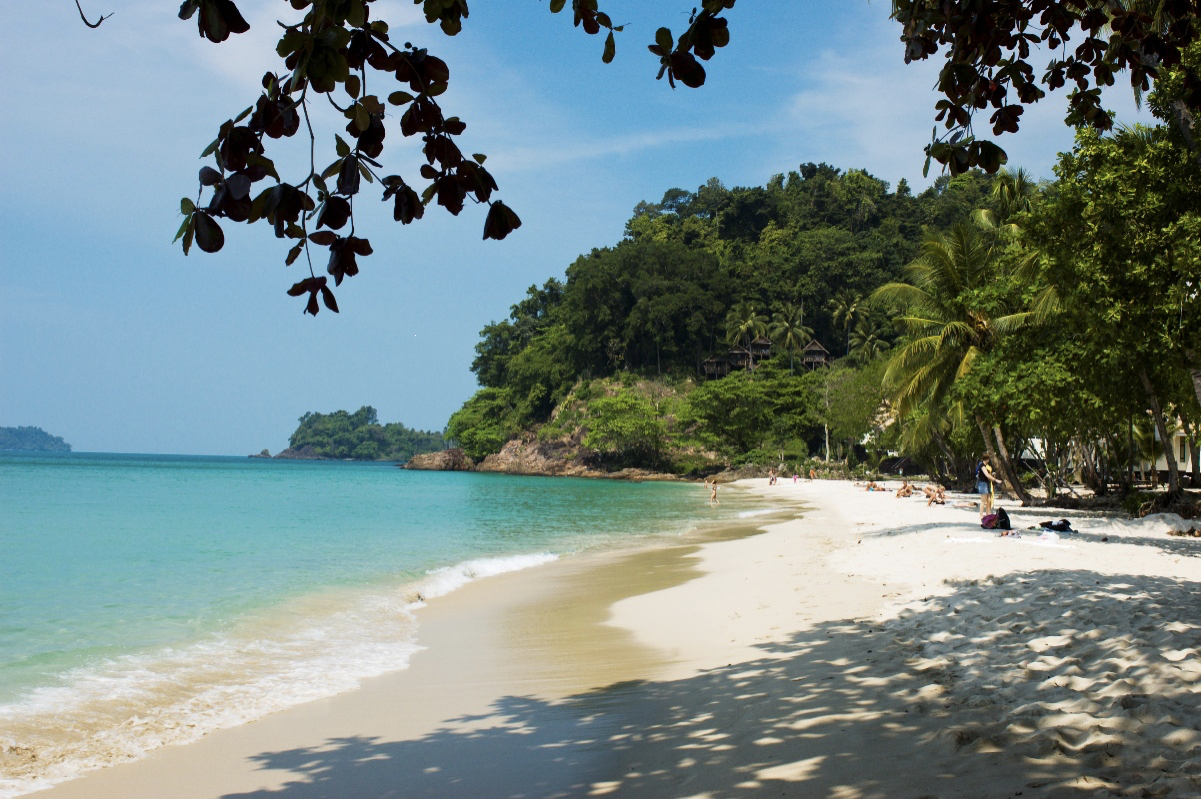
Koh Chang, the country’s third-largest island, could be the place to stake your claim on Thailand’s new development wave. © iStockPhoto.com/CWLawrence
Koh Chang is a popular holiday destination for a wide variety of people, but especially families. It’s rustic. It’s authentic. It’s coconuts and monkeys on the beach. Investors who own beach houses and pool villas there already enjoy 8% net returns even though their units are occupied for only five months of the year.
Koh Chang suffers an extended low season because the only way to get there is a 45-minute ferry ride. In the rainy season, the schedule is sporadic, and the weather can be dicey. I know I’m not alone when I express a healthy fear of Asian ferries when the sea gets angry.
The bridge would solve that problem. Investors could easily increase occupancy to eight to ten months, resulting in a much higher ROI. What’s more, the airport in Trat is being expanded into an international hub, creating a whole new stream of visitors. Property owners on each end of this bridge will profit handsomely.
But this isn’t the only “Bridge to Profit” on the horizon…
The big bridge project dominating the news right now is known as the “Thailand Land Bridge Project.” This is a proposed $30 billion mega-infrastructure initiative designed to bypass the congested Strait of Malacca by creating an overland transit route across Thailand’s narrow southern peninsula.
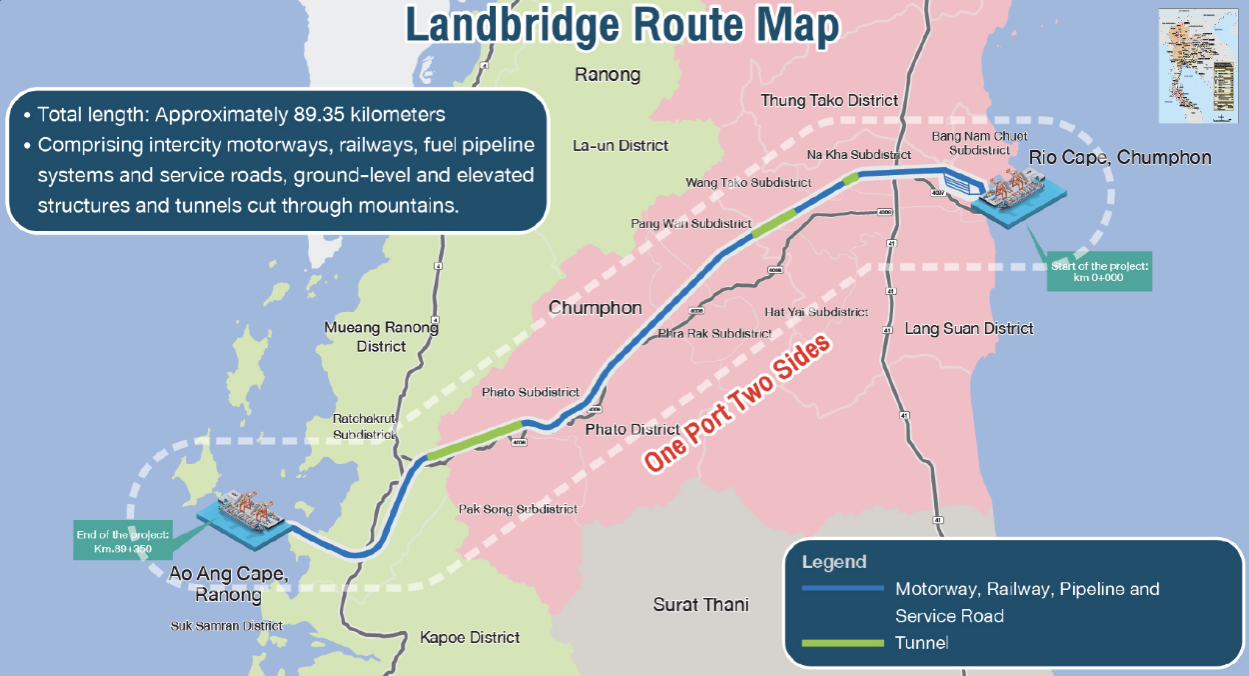
Thailand’s proposed “Land Bridge” across its southern peninsula. More details here.
This project has been kicked around for a few years, with feasibility and environmental impact studies being conducted more than once.
The bridge would connect two unassuming provincial towns, Chumphon on the Gulf of Thailand and Ranong on the Andaman Sea. Both would be built out as megaports and connected via a 90-kilometer corridor of road and rail. Cargo ships could be offloaded and reloaded at each end, shaving three to five days off their voyages and yielding average savings of 15%. An estimated 280,000 jobs would be created.
I’m always looking at these kinds of developments from a property investor’s point of view, because real estate is the easiest way for expats to get their money in play here. The opportunities this megaproject presents differ from the tourist- or retired expat-focused buy-to-let model.
The type of expat communities that Chumphon and Ranong would build is different from those in Phuket, Pattaya, Bangkok, or any of the islands. Both would become thriving industrial port towns, similar to Sri Racha near the massive Port of Laem Chabang and to Rayong near the industrial port of Map Ta Phut, on the Eastern Seaboard. That means working expats would be the majority of foreigners living there from the very start.
That’s a completely different dynamic from a tourist town and great for property investors, as all the secondary infrastructure, such as international schools, private hospitals, western-style shopping, and entertainment, would soon follow. Best of all, corporate rental contracts with major corporations such as Honda, Toyota, and Mitsubishi are generous and long-term. Commercial property investments near big industrial hubs can also be very lucrative.
What makes these locations even more attractive is the fact that they are both gorgeous seaside towns. The presence of working expats will create a nice soft-landing spot for retirees who can enjoy all the comforts of the Western world, but instead of going to work, they just go to the beach. A place that’s good for both investing and living will always increase in value.
The Land Bridge Project is not without its opponents, and progress on implementing the ambitious plan has flickered on and off like a lightbulb that needs just a little twist to stay properly lit.
Modernization of Ranong’s port is likely to be the first part of the project to gain real traction, as well as the direct rail link across the Kra Isthmus to Chumphon.
When that happens—both these sleepy coastal towns will enjoy significant growth spurts whether the actual “Land Bridge” ever materializes or not.
To the outsider, all these developments may seem unrelated at first glance. A tourism campaign here, tighter visa laws there, a proposed bridge project somewhere else, but they’re all really part of the same story.
Thailand is attempting to solve several challenges at once. The government wants to attract higher-value visitors, eliminate abusive land-ownership structures, absorb a mountain of unsold property inventory, strengthen investor confidence, and reclaim market share from increasingly competitive neighbors.
The mechanisms deployed to accomplish those goals—expanded foreign condo ownership, significantly longer land leases, major infrastructure projects, and a renewed tourism strategy—could reshape and revitalize the country’s property market for years to come.
Building an argument for investing in Thailand is not so hard. We could analyze spreadsheets, study trends, and project capital appreciation from now on. There’s upside everywhere you look.
Getting the timing right is the hard part. Identifying where all these elements converge, conjuring the perfect storm, before the broader market fully prices them in is the goal.
Things don’t always happen when they’re supposed to. Getting it wrong can leave you feeling like you should have been there yesterday, or worse, waiting for all that upside to arrive.
I have the distinct advantage of having lived here a long time. I can tell you about what my eyes have seen over the past 25 years. I can tell you how it feels, boots on the ground. Perhaps “feeling” isn’t the most scientific factor to consider when making an investment move, but syncing with the rhythm of this place is how you fine-tune your decisions and maximize your profit.
When I lived on the beach in Florida, I’d walk out with my coffee at sunrise every morning up to my knees in the Atlantic Ocean. I love the feeling of the sea retreating, pulling the sand from under my feet. Then, there’s that magical brief moment of peace between the ebb and the flow, just before the waves come rushing back in.
That’s where we are in Thailand right now.
How should you narrow your search?
If I were playing the long game, I’d say Chumphon or Ranong. You only have to look at the success in other major port towns like Sri Racha and Rayong to see the future there. If I were looking for instant gratification, Bangkok is the obvious choice. The hot new neighborhood right now is Bang Na, with two Skytrain stations and a direct connection to BITEC, Bangkok’s world-class convention and trade venue, and home to MEGA Bang Na, a massive shopping center anchored by a huge IKEA store.
In a few years, you’ll probably find me crossing Ganesha’s new bridge to watch this rising tide on one of Koh Chang’s pristine beaches. I’ve got a thing for coconut trees, monkeys, and profit.
© Copyright 2026. All Rights Reserved. Reproduction, copying, or redistribution (electronic or otherwise, including online) is strictly prohibited without the express written permission of Global Intelligence, Woodlock House, Carrick Road, Portlaw, Co. Waterford, Ireland. Global Intelligence Letter is published monthly. Copies of this e-newsletter are furnished directly by subscription only. Annual subscription is $149. To place an order or make an inquiry, visit https://internationalliving.com/page/faq/. Global Intelligence Letter presents information and research believed to be reliable, but its accuracy cannot be guaranteed. There may be dangers associated with international travel and investment, and readers should investigate any opportunity fully before committing to it. Nothing in this e-newsletter should be considered personalized advice, and no communication by our employees to you should be deemed as personalized financial or investment advice, or personalized advice of any kind. We allow the editors of our publications to recommend securities that they own themselves. However, our policy prohibits editors from exiting a personal trade while the recommendation to subscribers is open. In no circumstance may an editor sell a security before our subscribers have a fair opportunity to exit. The length of time an editor must wait after subscribers have been advised to exit a play depends on the type of publication. All other employees and agents must wait 24 hours after on-line publication prior to following an initial recommendation. Any investments recommended in this letter should be made only after consulting with your investment adviser and only after reviewing the prospectus or financial statements of the company.