Dear Frontier Fortunes Subscriber,
Want to make passive income from your crypto?
Or maybe you want to get into crypto for the first time and earn some money—but not take on as much risk as some crypto strategies demand.
It's a worthy cause for sure and one that the crypto industry is always addressing as it launches ever more ways to use crypto as a means for generating a real income.
But a lot of the strategies that have popped up over the last couple of years can be quite risky or complicated to execute, or in many cases, both.
But they don't have to be either—which is what this special “video issue” of Frontier Fortunes is all about… a “crypto income” strategy that I've been using for a while now, one that is easy to set up and implement.
I call it the “crypto kiosk money machine.”
Watch my hour-long video masterclass on this topic now to see how you can get started for yourself…
Once you've set it up, the crypto kiosk money machine spits out a never-ending stream of money for doing nothing more difficult than selecting two cryptocurrencies—and then depositing them at a specific website where crypto traders are actively buying and selling crypto.
I wrote about this strategy in a general sense in my daily Field Notes e-letter back in late November. I showed readers that, after just a 16-day period of transactions, I'd earned nearly $1,000 in passive income, an annualized return of more than 300% based on my investment.
I can tell you that in the weeks after that column, I've continued to earn an ongoing stream of income, and my annualized return now is right at 365%.
Again, I go into all the details of that in your new “video issue”—and show you how you can make passive crypto income in exactly the same way.
Below I’ll run through the basics of what I show you in the video… but again, for the full details, you’ll want to watch the whole presentation.
The crypto market is on a tear… with several of the positions in our Frontier Fortunes portfolio now up multi-hundreds of percent. Our new Solana portfolio, which I put together for your fall issue, is already proving its worth. Our positions are up 64%... 104%... even as much as 147%... in little over a month! I’ve already advised that we should recoup our initial investment by taking 100% profits on half our position in two cryptos—and let the rest ride as this bull market continues.
There are no signs of the market slowing… especially with pro-crypto President Donald Trump about to reassume the highest office in the land. Trump has spoken about creating a US Strategic Bitcoin Reserve and turning the US into the world’s crypto capital. That’s a big reason bitcoin has broken six-figures for the first time and crypto traders continue to be bullish.
So, now is a good time to be think about other strategies for generating wealth from crypto (rather than just buying coins and tokens and waiting/hoping for them to appreciate)… and that’s why I’ve put together this special multimedia edition of your quarterly newsletter.
You’ll know this as a Frontier Fortunes reader—but I've been swimming in the deep end of crypto for years now. And alongside traditional investing and trading, I've actively searched for and used various passive income strategies. My “crypto kiosk money machine” that I describe in this issue is one of those strategies; I've been using it now for more than a year. It's one of the easiest to understand and easiest to implement, whether you're a crypto newcomer or someone who's been trading crypto for a while now.
So, let's jump into this.
To participate in the “crypto kiosk money machine” strategy, you're going to need a browser wallet that works on the Solana blockchain. There are several good ones, including Phantom, Backpack, and Solflare. I personally have used them all for various purposes. But I would suggest you start with a Phantom wallet because it's the most commonly used browser wallet on Solana, and it's user friendly.
You're also going to need to load your browser wallet with crypto, and you can do that by sending USDC (US Dollar Coin) from a crypto exchange such as Coinbase, Kraken, Gemini, or any of the others, to your wallet. If you don't know how to do that, it’s all explained in The Frontier Fortunes Guide to Trading Crypto, which also details how to get a Phantom wallet.
(USDC, to remind you, is a blockchain doppelganger for US fiat dollars. They convert back and forth 1 to 1.)
How much money should you invest in the “crypto kiosk money machine” strategy? That is entirely up to you and your comfort level. Frankly, you can pursue this strategy with just $100 if you want. That's not going to generate much income early on. But over time, you will be able to grow the size of your account into the 1,000s so that it does begin to generate nice amounts of passive income.
However, I'd suggest you start with $1,000 to $5,000, if that's doable. And if you're comfortable investing more, then I would say go for it.
Once you have the money you wish to invest in this strategy in your crypto exchange account (i.e. your Coinbase account, or your account at another crypto exchange), you will need to convert that into USDC. With USDC in your account, you then need to send that crypto to your Phantom browser wallet.
Follow the instructions in The Frontier Fortunes Guide to Trading Crypto if you need a step by step guide on how to do that.
Before I tell you the next step, let me share that the example we're going to use in the crypto kiosk money machine strategy is built around two cryptocurrencies, Solana and Jupiter. There are scores of currencies we can use for this strategy, but the example I'm using here is based on my own trading account where I'm using Solana and Jupiter.
Solana, you probably know, is one of the five largest cryptocurrencies in the world, and it's the coin that runs the Solana blockchain. Jupiter is essentially the Fidelity or Charles Schwab of the Solana network, and it's where investors and traders go to trade one currency for another.
The way this strategy works requires depositing the two cryptos in equal proportion in dollar terms.
So if you deposit $1,000 of Solana, you're going to need to deposit $1,000 of Jupiter as well. So you're going to need both Solana and Jupiter in your Phantom wallet in equal proportion. And to load both in your Phantom wallet, you're going to need to convert the USDC in your wallet into Solana and Jupiter tokens, and you're going to do that by going to Jupiter Exchange at jup.ag.
This is what the website looks like…
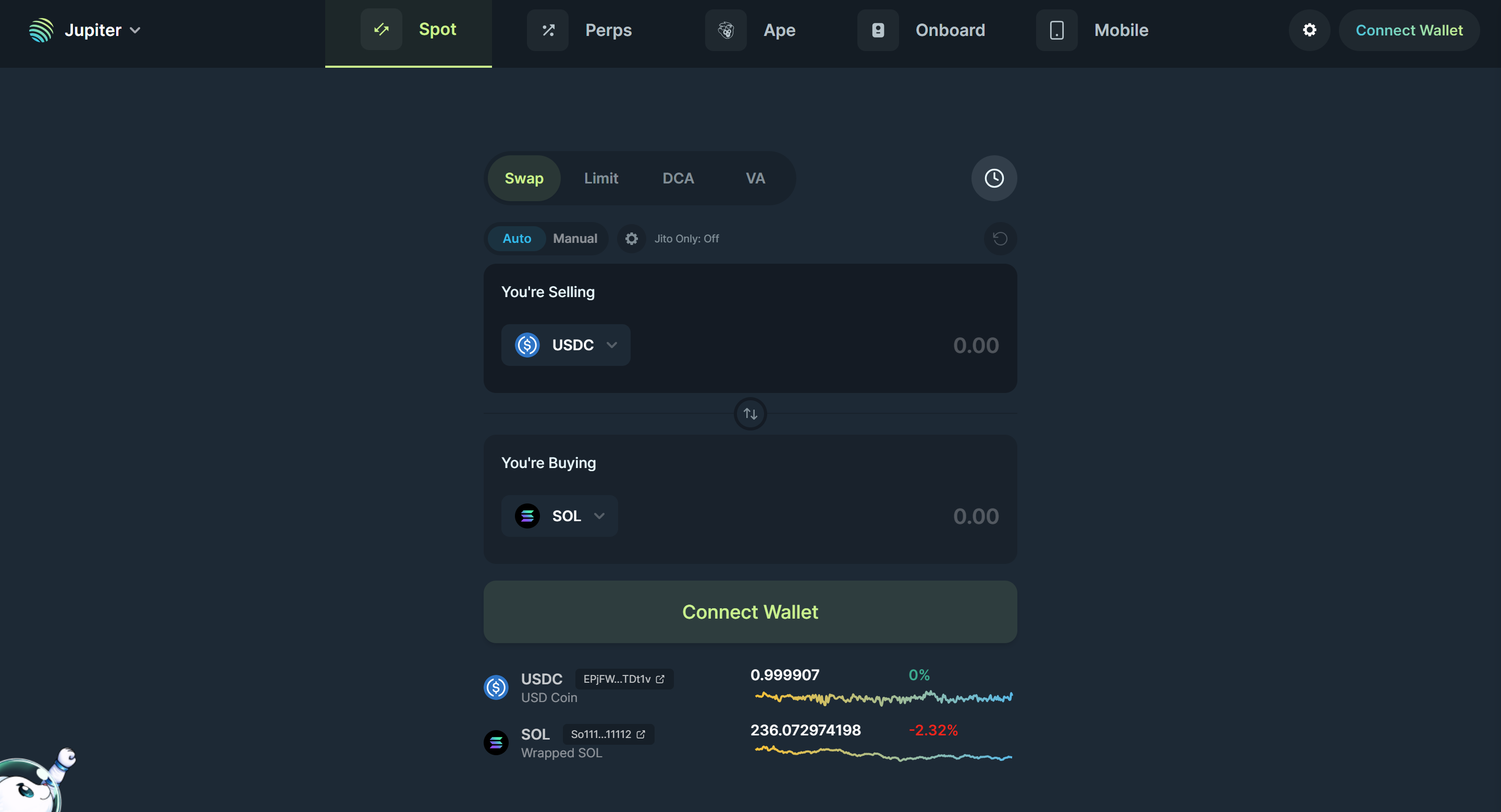
You're going to have to connect your wallet by clicking where it says “Connect wallet.” Then follow the prompts that show up.
(Follow along as I show you the process in the video.)
We’re then going to convert the USDC in our Phantom wallet into Solana, using the Jupiter Exchange. (Again, you can see that process in the video.)
Once that process is complete, and you’ve confirmed that you now have Solana (SOL) in your wallet, you’ll follow the same process to convert some more USDC into JUP (the Jupiter token).
So we now have the tokens that we need for this process.
Now that you have Jupiter and Solana tokens in your Phantom browser wallet, we can begin earning passive income with the crypto kiosk money machine strategy.
But I’m sure you’re wondering… what is the strategy really all about?
I think of this strategy like I’m operating a currency exchange kiosk…
Let’s say you’re traveling from the US and you land in Paris, France, and you go to the first currency exchange kiosk you see and you turn US dollars into euro that you can spend at the Eiffel Tower.
And when your trip is over and you're back at the Paris airport, you go to the same currency exchange kiosk and you return your unused euro and you reclaim dollars.
That all happens because there's a person running the currency exchange kiosk who can quickly facilitate this trade because they have a big treasure chest of euros and dollars and all the other currencies in the world they need so that travelers can trade back and forth between them.
But the question becomes… who puts all those dollars and euros and all the other currencies inside the treasure chest? Well, that's investors. They've invested their money in the currency kiosk because every time you and I and every other traveler needs to convert euros for dollars and dollars for euros, we stop at this particular kiosk and make the trade, and we pay a few dollars (in commission) for that service.
The investors in turn collect a part of that fee because they're the ones who fill the treasure chest with their own euros and dollars to begin with. That is precisely the role we're playing with my “crypto kiosk money machine.” We're the investors. Only instead of supplying fiat currency to a real world currency exchange kiosk, we're supplying cryptocurrencies to a digital treasure chest on the blockchain that traders can use to move between two cryptocurrencies.
Technically, this strategy is known as “dynamic liquidity market making” or DLMM. You pursue it at a website called meteora.ag.
I’m not going to bore you with the inner workings of DLMM. Just know that it is a blockchain-based technology that allows for dynamic fees as traders trade back and forth between two cryptocurrencies. There’s always a set minimum fee, but as demand for a particular crypto takes off for whatever reason, the technology behind DLMM kicks in and extracts greater fees amid greater demand. And among crypto traders, those fees are largely irrelevant in spicy moments when the market is moving. They just wanna get in or get out, and they don't really care about a slightly higher fee. But we do care because the slightly higher fee means more income to us.
Meteora is what's known as an automated market maker or a liquidity protocol. The technical definition is that it's a decentralized system for smart contracts that facilitate the transfer of digital assets like cryptocurrencies. In practical terms, just think of it as a digital bulletin board like the kind you see at a supermarket entrance where people advertise what they're looking to buy or what they have to sell. Now put a digital contract in the middle of that and you have a liquidity protocol. That digital contract or “smart contract” ensures that the seller really has the goods, and it ensures that the buyer really has the cash and will deliver it for the goods.
To get started with this strategy, you’ll head to the Meteora homepage at meteora.ag. You’re going to connect your Phantom wallet like I outline in the steps in your video…
You’re going to click on “Pools” and then “DLMM”…
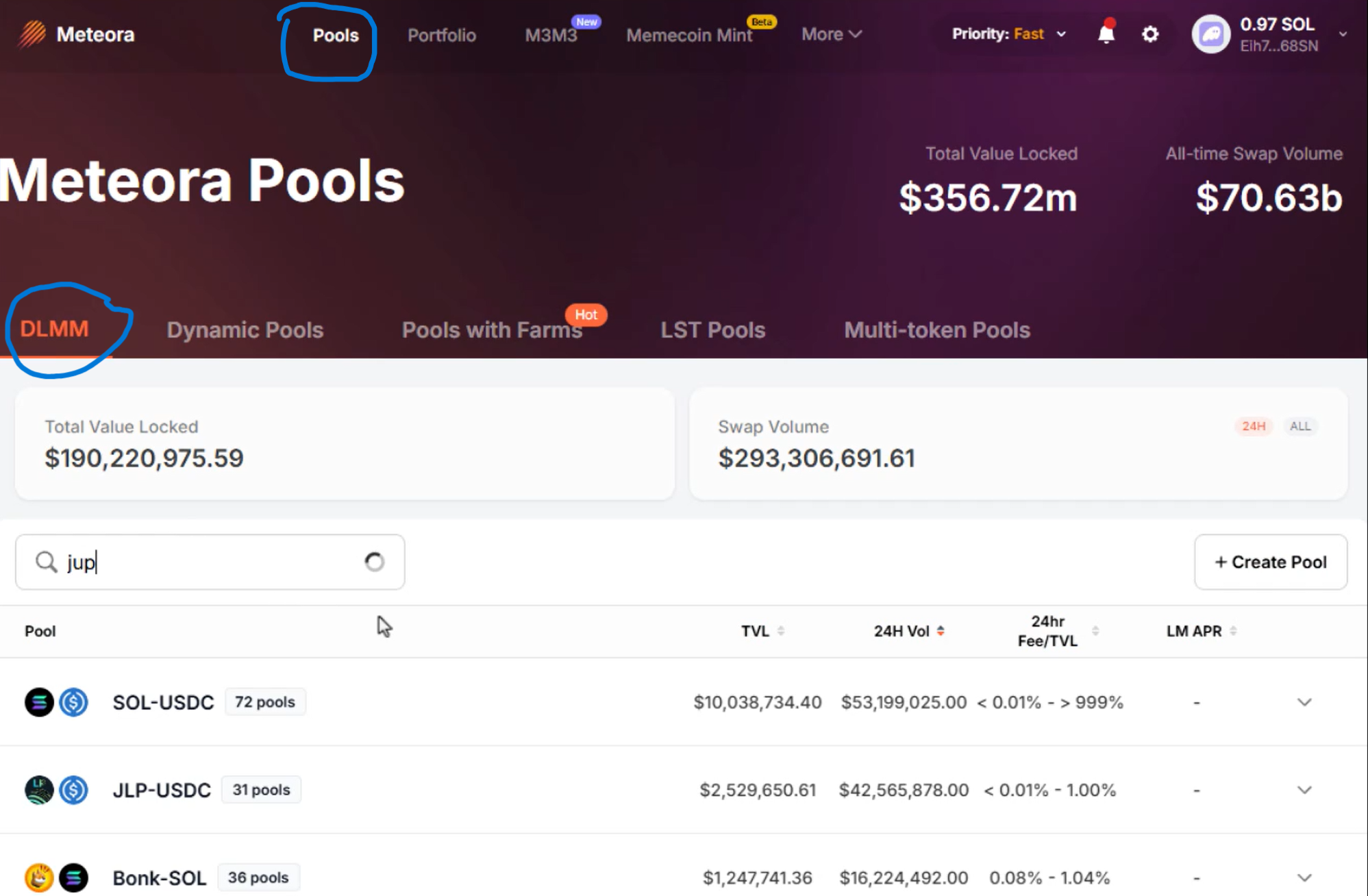
Go to the search function and type in “JUP,” the symbol for Jupiter, and you're going see all the possibilities pop up. These are all the various Jupiter-based currency pairs we can use for this particular strategy…
We are going to focus on JUP-SOL right here…
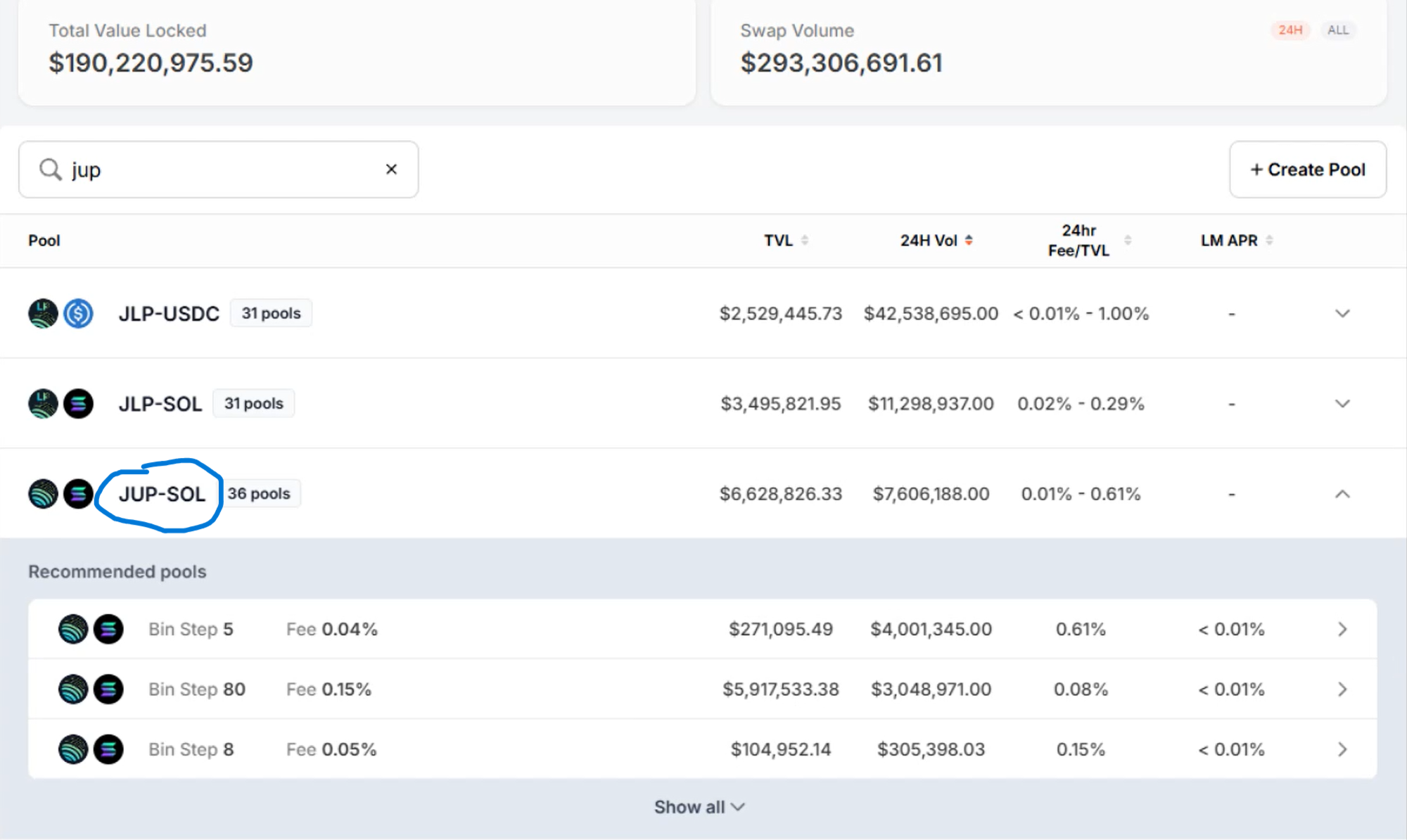
And when you click on that that, the site is going to give you a selection of recommended pools you can choose from. (Like in the screenshot.)
If you want to see all the pools, then just hit “show all,” at the bottom and you're going to see all the JUP-SOL pools that exist. But you’ll notice that many of the pools have absolutely no assets in them. You want to shy away from those because there's no trading going on there, which means you are not going to have any kind of fees coming in.
You want to focus on bins that have meaningful volume in them, which is where you're going to collect your fees.
We’re going to go with the first recommended pool here, Bin Step 5.
You can choose a different one when you are comfortable with this strategy if you want. I'm just using this one because it’s what I've been using in my personal account.
Click on “Bin Step 5,” and then click on “Add Position.” That's how you're going to start the process with your “crypto kiosk money machine.”
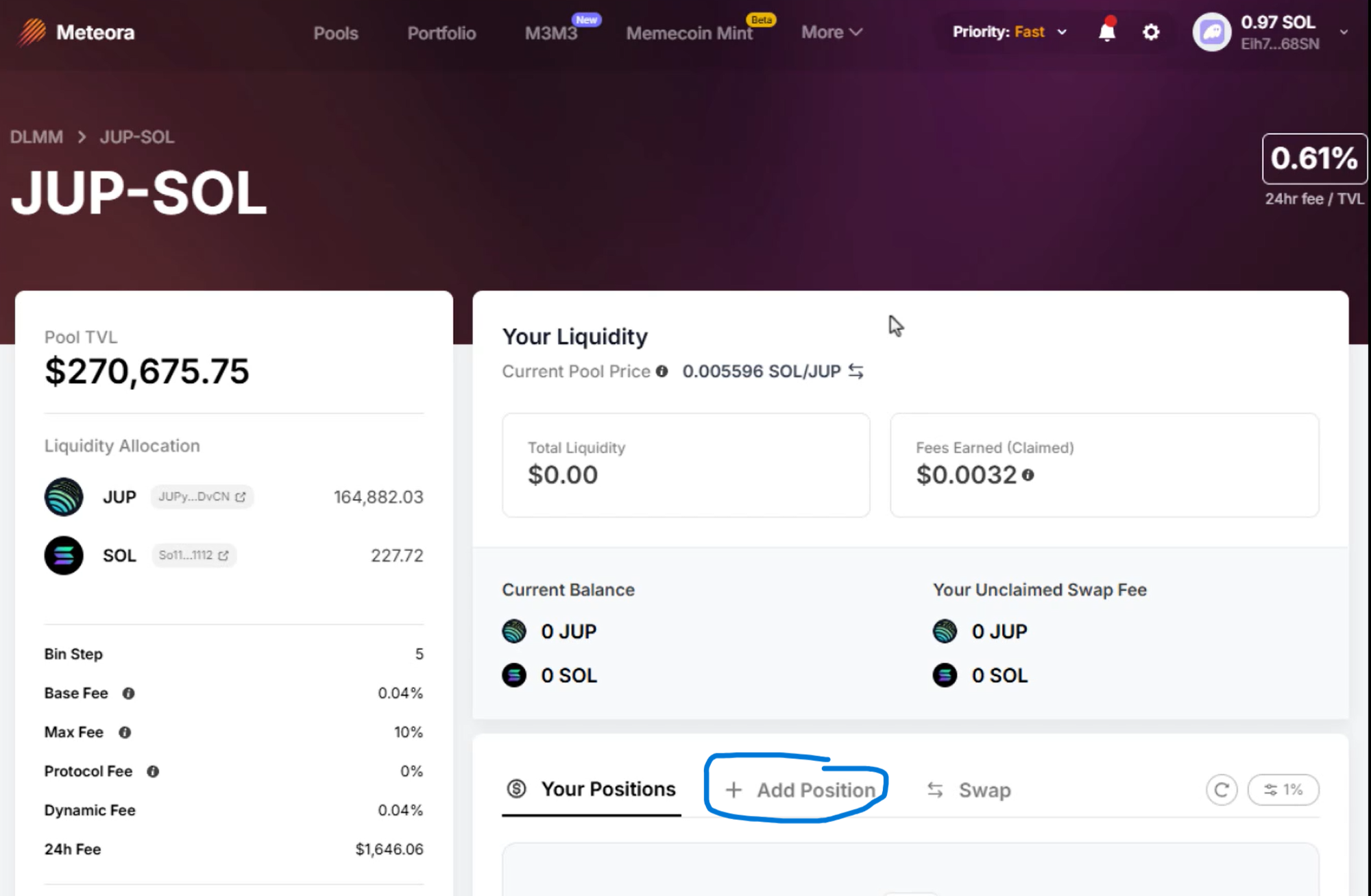
Once you clock on “Add Position,” you’re going to see that we already have the JUP-SOL pair here…
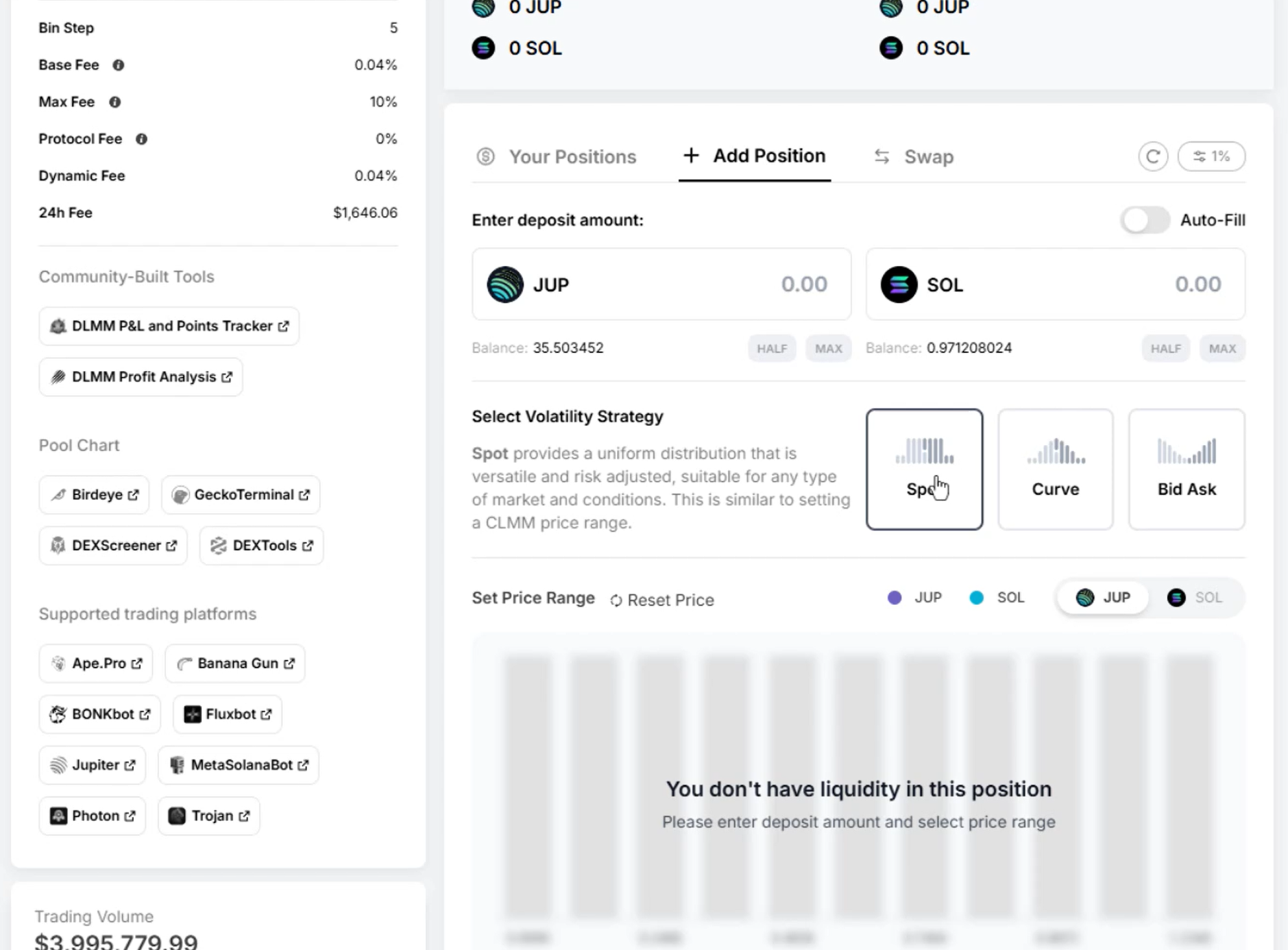
To set up a transaction, the first thing we're going to do is toggle “Autofill” at the top of the page. Sometimes this is on, sometimes it's off.
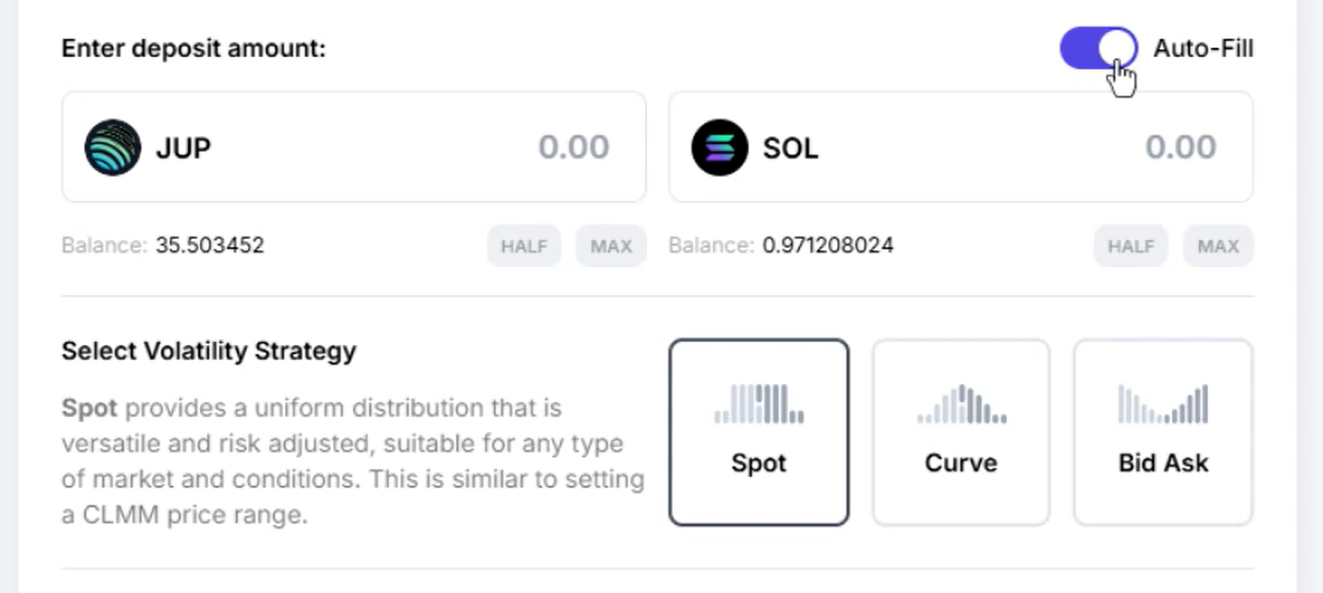
You want to make sure you have this purply-blue color to mean that it's on. Meteora is then going to automatically fill in the appropriate amount of the other token, which just makes it a little easier for you.
I am going to go max on the Jupiter balance I have in my wallet. So I click on “max” below “JUP.” It's going put all 35.5 JUP that I have in my wallet into the pool, and Meteora will automatically fill in the amount of SOL that this is currently worth.
In this example, it's going to take 0.1946 Solana out of your wallet to make the match…
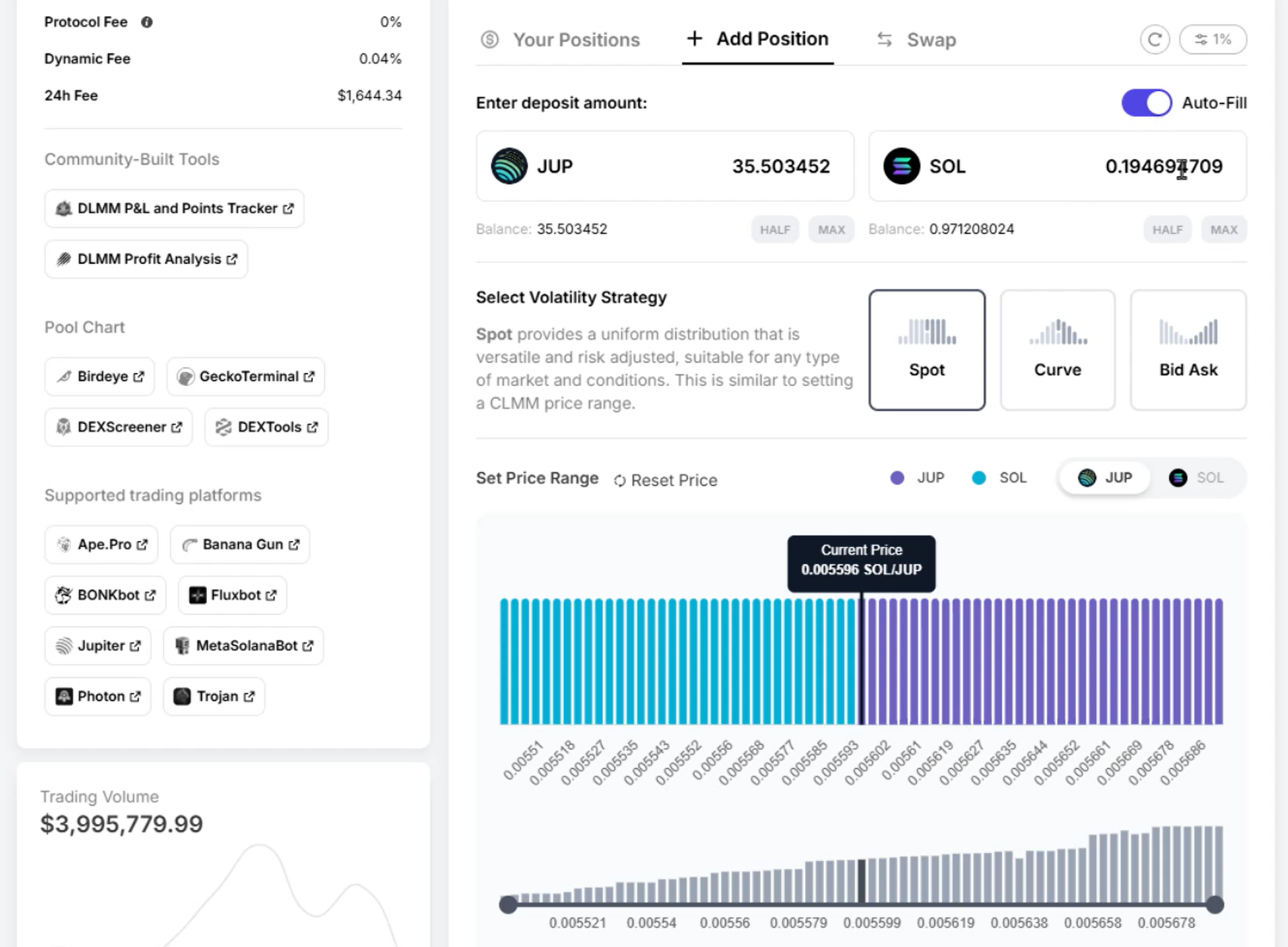
In your video, I explain further details about the various strategies you can use on Meteora… but for this example, we're just going to stick to the Spot strategy because the implementation is straightforward and pretty easy to understand.
So we have all of this set up now:
We're going to be trading the JUP-SOL pair. And we’re going into the Spot strategy.
I've already set up my trade to invest the 35.5 JUP and the equivalent in Solana as the other side of the pair.
Now, we're going to scroll down here and we're going to click “Add Liquidity”…
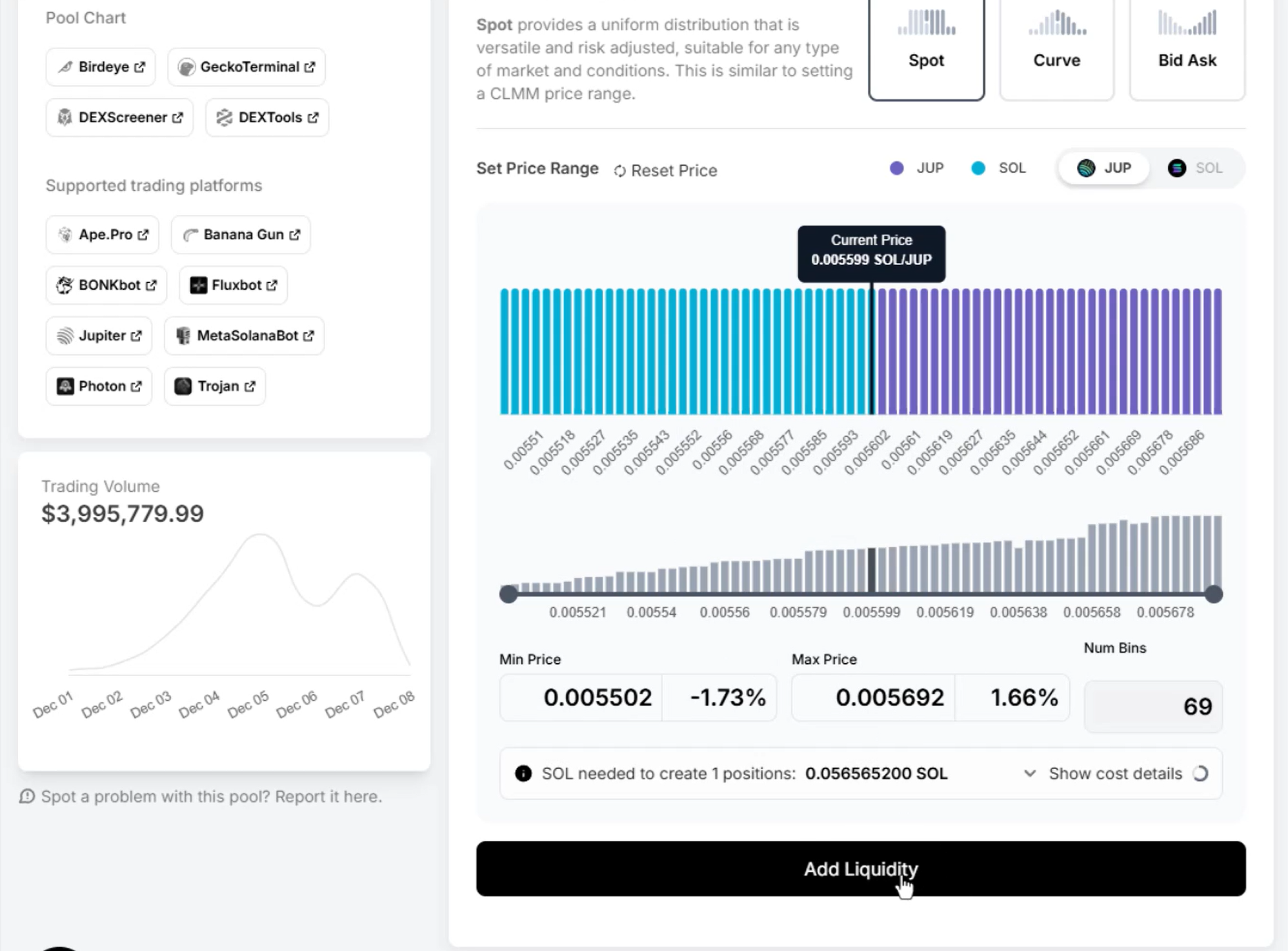
You’ll then simply be asked to sign into your Phantom wallet, and you’ll confirm the transaction that you’ve already set up…
You’ll then see this pop up at the bottom of your screen…
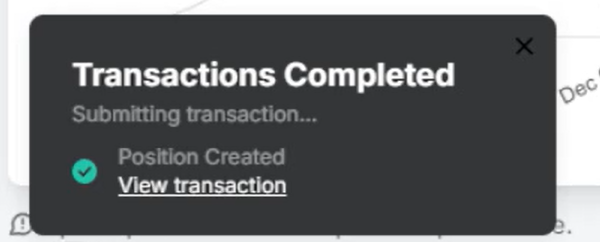
Once your transaction is confirmed, your crypto pair is now at work for you earning currency exchange fees—which is the “money machine” portion of our “crypto kiosk money machine.”
To see the money at work, you just click on the little green shaded box…
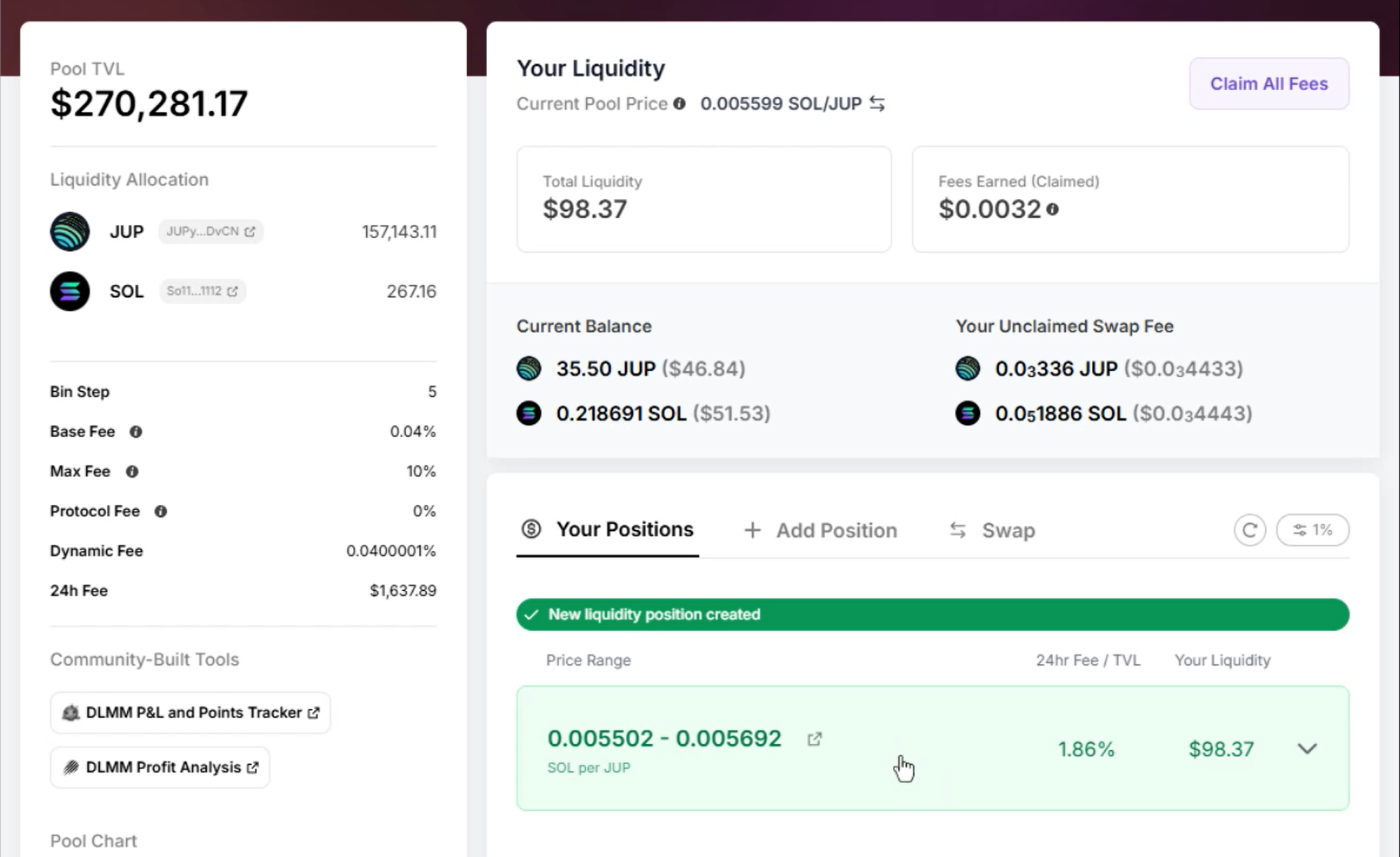
Your position liquidity dashboard will open up, and show you the current balance and how much you have of each token.
If traders are buying more SOL, then your SOL balance is going to be decreasing while your JUP balance increases. Personally I am very happy owning either of these crypto, and that’s why I’m not worried about ending up with all SOL or all JUP. That’s also why I think of this strategy as having such limited risk…
To the right over here is your unclaimed swap fees… This is your income. This is the money that you are earning for all the trading happening through the balance that you have provided to the market…
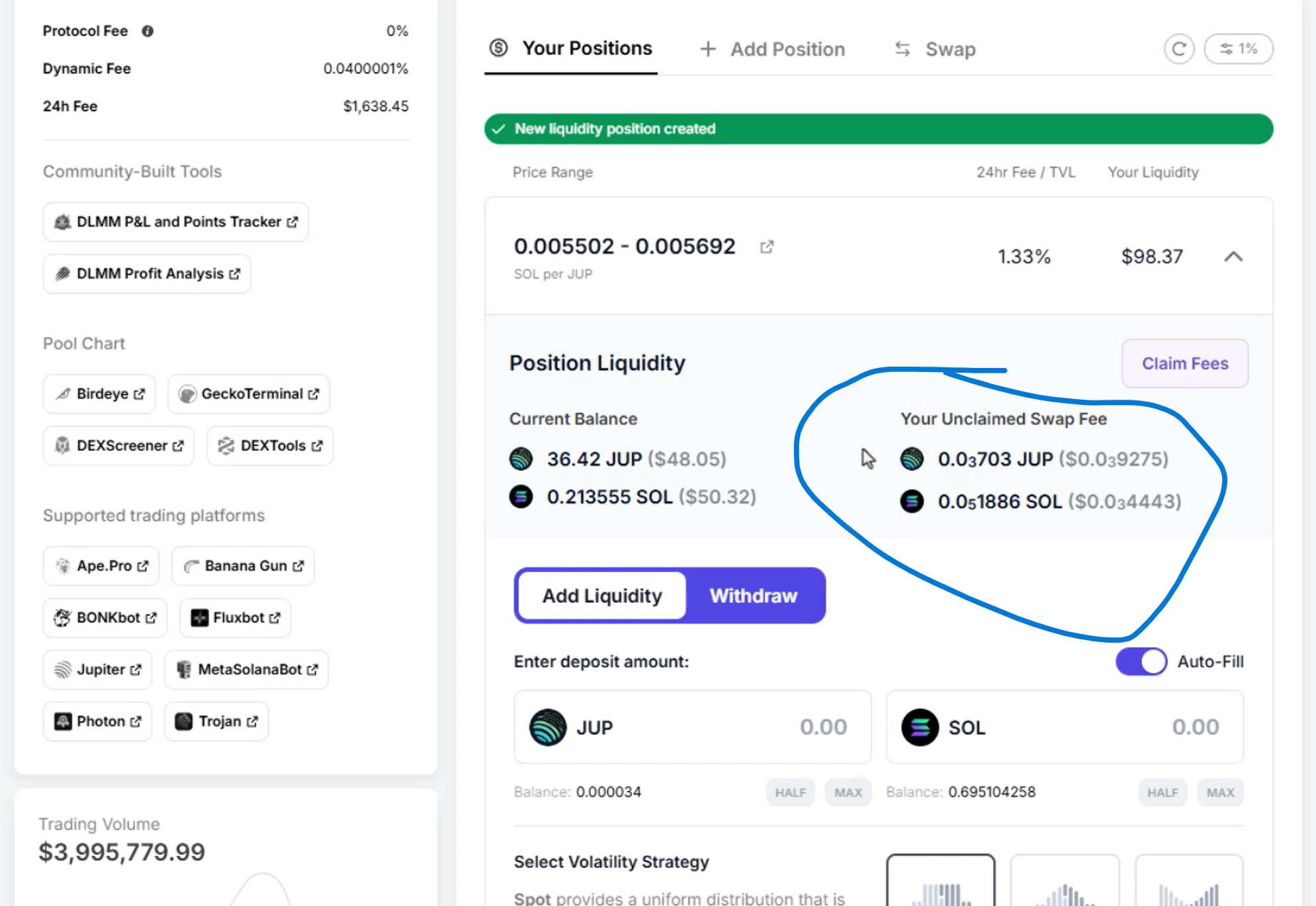
You can collect your fees anytime you want by clicking on “Claim Fees.” Your wallet will pop up for you to approve the transaction. And after a moment or two, the transaction will be complete, and your unclaimed fee balance will drop to 0 again.
So… that’s the basics of how you can get started earning income with your own personal “crypto kiosk money machine”…
Again, you’ll find much more detail in your video, which you can check out right here.
And with that, I’ll sign off again until next quarter…
2025 promises to be yet another exciting year for crypto—and I’ll be here every step of the way to advise you on the moves we should make.
Talk to you next quarter…
Jeff D. Opdyke
Editor, Frontier Fortunes
© Copyright 2024. All rights reserved. No part of this report may be reproduced by any means without the express written consent of the publisher. This report presents information and research believed to be reliable, but its accuracy cannot be guaranteed. There may be dangers associated with international travel and investment, and readers should investigate any opportunity fully before committing to it. Nothing in this e-newsletter should be considered personalized advice, and no communication by our employees to you should be deemed as personalized financial or investment advice, or personalized advice of any kind. We allow the editors of our publications to recommend securities that they own themselves. However, our policy prohibits editors from exiting a personal trade while the recommendation to subscribers is open. In no circumstance may an editor sell a security before our subscribers have a fair opportunity to exit. The length of time an editor must wait after subscribers have been advised to exit a play depends on the type of publication. All other employees and agents must wait 24 hours after on-line publication prior to following an initial recommendation. Any investments recommended in this letter should be made only after consulting with your investment adviser and only after reviewing the prospectus or financial statements of the company.