My latest scouting trip took him somewhere few Americans ever consider.
This weekend I’m winging my way to Mauritius, an island nation in the southwestern Indian Ocean. It’s a reporting trip, so I’ll have a lot more to say about the place when I return. But before I go, here’s why I decided to target this little gem of a destination.
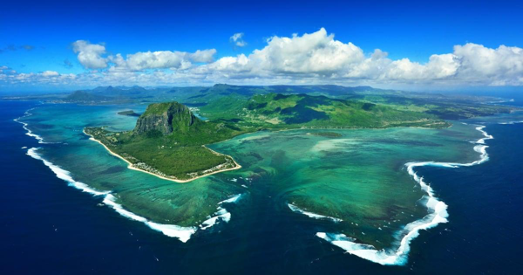
For Americans contemplating retirement abroad, Mauritius offers a proposition that sounds suspiciously like something invented by a travel agent after two rum punches: tropical beaches, warm weather, political stability, English-language administration and a straightforward route to legal residence.
Unlike many postcard-perfect islands, however, Mauritius isn’t merely a collection of resorts with a government attached. It is a functioning, culturally complex country with modern services, a diversified economy, and 1.2 million residents. It’s even making headway in establishing itself as a global financial hub.
Mauritius sits in the Indian Ocean, east of Madagascar. It’s about half the size of Rhode Island. Its human history is unusually international. Portuguese sailors put it on European maps; the Dutch attempted settlement (and killed all the dodo birds); the French developed Port Louis and a plantation economy; and Britain captured the island in 1810. Slavery was soon abolished, after which large numbers of indentured labourers arrived from India. Mauritius became independent in 1968 and a republic in 1992.
The result is a society shaped by Indian, African, Chinese, French, and British influences. English is used officially, while French and Mauritian Creole dominate much everyday conversation. Hindu, Christian, Muslim and Chinese traditions coexist, and the country’s food, public holidays and architecture reflect that mixture.
The main retirement visa route is the Retired Non-Citizen Residence Permit. Applicants must be at least 50. It’s a five-year permit that can be renewed. You need to prove $2000 a month in regular passive income. You also need to spend half the year in the country and become a tax resident. In other words, this is meant for people who actually live there, not collectors of exotic residence cards who visit once every third leap year.
The second route to residency is through property purchase—the subject of my visit. A foreigner who purchases qualifying residential property worth at least US$375,000 under an approved scheme can get residence linked to ownership. This may suit wealthier retirees who know they want a villa or apartment. Helpfully, successful applicants are allowed to rent the property out—an option increasingly unavailable in Europe, for example.
A third option is the Premium Visa, a quasi-digital nomad permit that can be renewed annually. It’s useful as a trial run for anyone who wants to discover whether island life remains enchanting after the hotel breakfast buffet disappears.
So, what is Mauritius like as a long-term home? I’ll have more to say when I get back, but the strongest argument is quality of life. The island offers warm weather, attractive coastlines, mountains, golf, sailing, diving and a food culture combining Indian, Creole, Chinese, and French traditions.
The climate is tropical, with hot, humid summers and cool, dry winters. Cyclones are a seasonal risk, mainly from November through April. Anyone buying property should look closely at drainage, construction standards, backup power and insurance rather than assuming that a sea view automatically makes a building sensible.
Safety is reasonably good. Petty theft, break-ins and some violent crime do occasionally occur, like anywhere. Roads can be narrow, uneven, and poorly lit, and Mauritians drive on the left—an arrangement that gives newly arrived Americans an opportunity to rediscover humility.
Healthcare is adequate for routine needs, especially in private clinics, where English-speaking staff are common. Public facilities may lack supplies, rural care is thinner, and serious cases may require evacuation. Retirees should budget for private health insurance and medical-evacuation coverage. The most common destination for those wanting off-island care is South Africa, which is a 4-to-5-hour flight away.
A person present in Mauritius for at least 183 days becomes a Mauritian tax resident. Unlike countries that tax your global income regardless of whether you bring it with you Mauritius only taxes income remitted to a bank on the island. Remitted income up to $10,600 is tax free. The next $10,600 is taxed at 10%, and anything above that is taxed at 20%. Many people simply use a foreign credit or debit card rather than remitting income to the country.
There are some obvious trade-offs. Compared with Portugal (for example), Mauritius offers tropical living and a relatively modest retirement-income threshold, but no European Union access and fewer nearby countries to explore. Compared with Mexico, Costa Rica, or Panama, it is much farther from family and familiar medical networks. Those destinations also have larger expatriate communities and more varied geography.
Mauritius counters with widespread English, a multicultural society, a stable parliamentary tradition, and the feeling of living somewhere genuinely different rather than in an overseas extension of Florida. Its location also makes it a useful base for travel to southern Africa, India, the Gulf, and parts of Asia.
As one would expect on a remote island, imported cars, electronics and branded groceries can be expensive. The country is also small. Some retirees will find that cozy; others will eventually feel they have driven past the same sugarcane field 900 times.
Mauritius is best suited to financially comfortable, healthy, and independent retirees who enjoy warm weather, cultural variety and island scale, and who don’t need frequent access to the United States. It’s less suited to those with complex medical requirements or a need to be near family.
The sensible strategy is to use the Premium Visa or an extended rental stay before committing to property. Live through the humid and cyclone seasons. Visit hospitals, supermarkets and ordinary neighbourhoods, not just resorts. Try the traffic at rush hour.
Mauritius isn’t paradise—paradise has no immigration forms, tax returns or potholes. But for the right retiree, it offers an unusual combination of beauty, stability, cultural depth and attainable residence.
That makes it a serious contender in the “retire overseas” world… not just an attractive screen saver.
Stay tuned for more next week…
Not signed up to Jeff’s Field Notes?
Sign up for FREE by entering your email in the box below and you’ll get his latest insights and analysis delivered direct to your inbox every day (you can unsubscribe at any time). Plus, when you sign up now, you’ll receive a FREE report and bonus video on how to get a second passport. Simply enter your email below to get started.