The Opportunity Hiding at Africa’s Southern Tip
“God, I love this country.”
My wife doesn’t even turn to look at me when I say that these days. The words come out unbidden nearly every time she and I drive back and forth to our cottage overlooking the Cogmanskloof, a winding cut through the Langeberg Mountains at the head of the Robertson Valley.
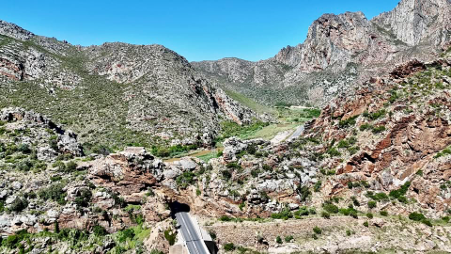
I love South Africa’s people and their culture. It’s become my culture too. But even South Africans can be irritating… especially on our long single lane highways. But no matter how many people pull in front of me and proceed at half the speed limit in the overtaking lane, I still say those words.
There’s just something about this place that gets into your soul.
And notably, I’m not the only American transplant who feels that way.
According to New World Immigration, a Cape Town based migration consultancy, there’s been a rapid increase in inquiries from Americans seeking to settle in South Africa. In just the last two months alone, 62 Americans have contacted NWI. That’s about five enquiries every week.
I’m surprised that people are attracted to the possibility of living in this country. What surprises me is that more than half of the applications to NWI were for retirement visas. Their average qualifying Social Security income is around $4,000 a month. They’re hardly the coastal elite: they hail from places like South Carolina, Delaware, Kansas, and Arizona.
But 14 of the 62 applicants in the last two months are potential remote workers, or people whose skills in high demand in this country. Given South Africa’s history as a difficult place to get into, this suggests something big happening in the background here.
For the first 30 years after our first democratic election in 1994, South Africa’s government was officially open to immigration from Europe and North America. In practice, however, immigration was rarely a priority. The country was focused on addressing the enormous social and economic challenges inherited from apartheid. Fearing fallout from immigration driven demographic shifts, the Department of Home Affairs—responsible for immigration—tended to slow walk applications, putting people off attempting them in the first place.
All that changed 18 months ago, when the ruling African National Congress lost its majority in parliament. Forced to assemble a coalition government, they gave cabinet seats to the Democratic Alliance, who run the successful Western Cape province and Cape Town.
Amongst the portfolios they took was Home Affairs. The result has been a rapid change in fortunes for anyone looking to settle in this stunningly beautiful country. Visa conditions are being simplified. Corruption is being rooted out. Officials are processing applications on their merit, not prejudice.
The paradox of Americans wanting to move here is jarring to us locals, to say the least. Current US policy cites is that the only potential refugees admissible to the United States these days are White South Africans, many of them Afrikaners, the descendants of the original European settlers who arrived in the Cape in 1652. The President claims they are subject to genocide, which is what affords them refugee status in the US currently, a claim I can say in complete confidence, without any political overtones, is categorically false.
The truth is that South Africa has long been everyone else’s political football. Back in the 70s and 80s, the anti-apartheid struggle was a cause célèbre in the global north. The Russians and the Cubans fought a proxy war involving South Africa in Angola. Since then, the global community has gone from celebrating South Africa’s peaceful transition to a democracy and worshiping Nelson Mandela to grumbling about our attempts at diplomatic independence.
My point is that more than most other countries, what you hear about South Africa is likely to be distorted by foreign agendas. The truth is wildly different.
This is one of the great lands of opportunity in the world today. Yes, there are lots of problems, including inequality, crime, and political corruption. But nearly everyone in the country recognizes those problems and is committed to doing something about it. The days when the ANC could simply point to its credentials as a liberation movement to get massive electoral victories are long over. We’re on the voyage of reinventing ourselves as an emerging middle power.
That means there are lots of opportunities here. Are boosted by the global shift away from Europe and other traditional destinations in favour of the Southern Hemisphere. Today, the Southern Cone of South America is the flavour of the month. But it won’t be long before Southern Africa and adjacent Indian Ocean island countries like the “Jewel of the Indian Ocean,” Mauritius, get the attention they deserve.
So, if you’re at the beginning of your quest to find a new place to relax your bones or make a living, or both, get in touch with me…and let’s talk about the opportunities here at the southern tip of Africa.
Not signed up to Jeff’s Field Notes?
Sign up for FREE by entering your email in the box below and you’ll get his latest insights and analysis delivered direct to your inbox every day (you can unsubscribe at any time). Plus, when you sign up now, you’ll receive a FREE report and bonus video on how to get a second passport. Simply enter your email below to get started.