And the mistake isn’t what you own… it’s where…
“I just want my money to be safe. I’ve worked too long to have melt away because of a weak dollar and a risky stock market.”
That’s a sentiment I’ve heard dozens of times in consultations with members of my Global Citizen service… especially in the last year or so.
My beat is “Global Diversification.” I help people with more than residency and passports.
As an economist, global traveller, and obsessive observer of political economy, I also offer insights into the best ways to keep and grow your wealth using all of the opportunities this world has to offer. Whether it’s an investment account in Switzerland, world-class farmland in South America, emerging industrial opportunities in Southeast Asia, or secure gold storage in New Zealand… I have a menu of options that can help you sleep easier at night.
But here’s something I hear too often: “Ted, the US stock market is doing great guns these days! Why should I take my money out of that and put it somewhere else?”
I understand that sentiment. The S&P 500 has been doing great guns this year:
My beat is “Global Diversification.” I help people with more than residency and passports.
As an economist, global traveller, and obsessive observer of political economy, I also offer insights into the best ways to keep and grow your wealth using all of the opportunities this world has to offer. Whether it’s an investment account in Switzerland, world-class farmland in South America, emerging industrial opportunities in Southeast Asia, or secure gold storage in New Zealand… I have a menu of options that can help you sleep easier at night.
But here’s something I hear too often: “Ted, the US stock market is doing great guns these days! Why should I take my money out of that and put it somewhere else?”
I understand that sentiment. The S&P 500 has been doing great guns this year:
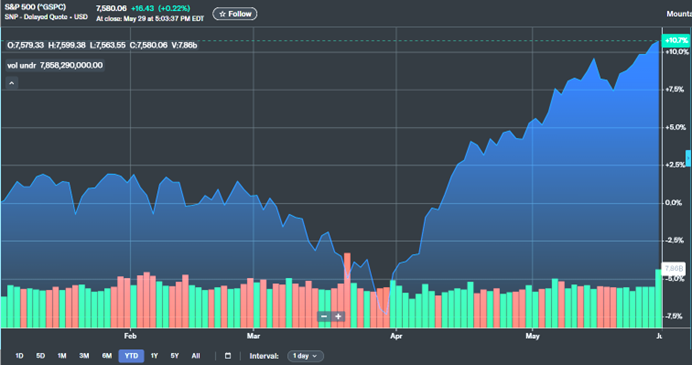
Now I have, shall we say, opinions about the sustainability of US financial markets. I firmly believe that the US stock market is a bubble just waiting to be popped. But even if that weren’t the case, I’d still advise you to move your money—or at least some of it—offshore.
That’s because I take a life cycle approach to investment:
1) The first three quarters of your working career: Higher risk, higher volatility. With plenty of time left to recover from a market setback, it’s fine to focus on speculation, like paying top dollar for the stocks of companies that have yet to generate a profit but have great potential.
2) The last quarter of your working career: Lower risk, lower volatility. As your time of active earning draws to a close, you have less time to recover from a market setback. You want a balanced portfolio that will maintain its value even if the broader market goes into deep correction.
3) The five years before retirement, and retirement itself: Reduce risk and volatility: You can’t eliminate risk altogether. But it is possible to build a portfolio of counter-cyclical and non-correlated assets that increase in value when US financial markets take a dive.
Globally diversified investments are particularly important in Stage Three of your investment journey. That’s because investing in foreign assets reduces risk and volatility in several ways:
By storing wealth and creating income streams outside the dollar. As our pal Jeff Opdyke likes to remind us, the dollar is on borrowed time. US deficits are out of control. That was fine when buyers of US Treasurys trusted Washington to manage things properly. But now? Different story.
By investing in stable assets uncorrelated to US financial conditions: One of the reasons I like foreign farmland so much, for example, is that they’re not making any more of it; it will always be needed as long as humans need to eat; and savvy investors tend to pile into it when financial assets become riskier.
By diversifying jurisdictions: Smart investors don’t put all their money in one company… because the people who run companies don’t always get it right. The same applies to countries: Spreading your wealth across multiple jurisdictions means that if one of them goes pear shaped, you can relax, knowing the others are in good shape.
This is uncontroversial advice… or it should be. Yet you won’t hear it from most US financial advisors.
I wish I had a dollar for every time a client told me that their broker, whom they‘d known for years, advised them not to invest outside the United States. US money managers say that because they don’t understand the opportunity, don’t know how to pursue it if they did, and don’t know trusted people to handle your money offshore.
I, on the other hand, do understand these things. I’ve been an expat for nearly 40 years. I’m enjoying excellent stable yields from assets I own outside the US. And I have a network of investment advisers, brokers, and other specialists who can help you achieve the profitability and sustainability I’m getting.
So don’t wait for the bubble to pop. Give me a call, and I can help you prosper globally, too.
Not signed up to Jeff’s Field Notes?
Sign up for FREE by entering your email in the box below and you’ll get his latest insights and analysis delivered direct to your inbox every day (you can unsubscribe at any time). Plus, when you sign up now, you’ll receive a FREE report and bonus video on how to get a second passport. Simply enter your email below to get started.